Large breed
Komondor Puppies
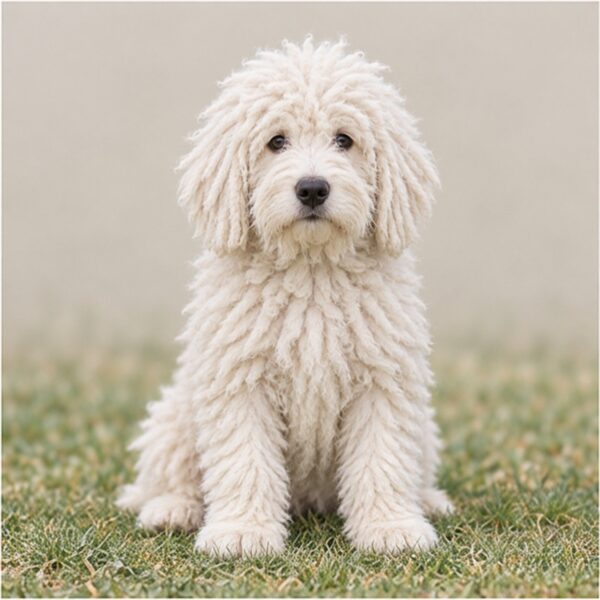
The Hungarian Komondor is a strong and powerful breed of guardian sheepdog draped in chunks of white dread like “cords.” Due to its physical attributes and exceptional instinctive consciousness, the Komondor breed is a natural guardian of livestock and property. Discover more about our Komondor puppies for sale below!
We do not have Komondor puppies on the floor today. Tell us what you are looking for and we will let you know the moment one arrives, or help you find a breed that suits your home just as well.
- Adult weight 80–130 lbs
- Height 25–31 in
- Lifespan 10–12 years
- Exercise 60 min a day
About the Komondor
The Komondor, with its striking corded coat and impressive stature, is a fascinating breed that hails from Hungary, where they traditionally served as guardians of livestock. As you consider welcoming a Komondor into your home, you should know that they have a temperament that combines loyalty and independence. This means they can bond deeply with their families while maintaining a unique personality that makes them both endearing and a bit challenging. Their affectionate nature and protective instincts can make them great companions, especially in homes with children or other dogs.
Read more about the Komondor Show less
In terms of energy, the Komondor has a moderate activity level and requires regular exercise to keep them happy and healthy. Daily walks and playtime in a secure yard can fulfill their needs, contributing to a well-balanced, content dog. However, they are not suited for apartment living due to their size and need for space. As a breed known for being both calm and adaptable, they can thrive in larger homes where they can stretch their legs and watch over their family.
Grooming a Komondor is a commitment, as their unique coat necessitates weekly maintenance to prevent matting and keep them looking their best. While their shedding is on the higher side, regular grooming will help manage this to some extent. Although Komondors may not be the top contenders for trainability, they possess a fair level of intelligence and can learn basic commands with patience and consistency.
If you require a loyal guardian and accommodating family member, the Komondor could be a wonderful fit, provided you’re ready for the unique care and training needs this breed demands. If you are considering adding a Komondor to your family, make sure to visit Petland Lake St. Louis & Fenton, MO, to see if this magnificent breed captures your heart.
Komondor breed profile
Every score below is set by our team for this breed. Higher is simply more of that trait, not better or worse.
Temperament
-
Affection Affectionate
-
Playfulness Calm
-
With strangers Cautious
-
Territorial Very territorial
-
Prey drive Moderate
Family & other pets
-
Young children With supervision
-
Older children Good
-
Other dogs Usually fine
-
Cats Needs care
Energy & exercise
-
Energy Moderate
-
Mental stimulation Moderate
Training
-
Trainability Takes patience
-
Intelligence Bright
-
Stubbornness Stubborn
Care & upkeep
-
Shedding Heavy
-
Drooling Some
-
Barking Occasional
Home life
-
Apartment living Needs real space
-
Time alone Short periods
-
Cold weather Comfortable
-
Warm weather Needs shade
A good match for
-
First-time owners Some experience helps
-
Senior owners Demanding
-
Running partner Short distances
-
Hiking Moderate
-
Therapy work Unlikely
-
Guarding Strong guardian
Living with a Komondor
Breed History
The Komondor was brought to Europe between the 12th and 13th Centuries by Turkic speaking nomadic Cumans. Komondors are descendants of Tibetan dogs. Historical data speculates that they originate from an area close to the Yellow River. During the second world war, the Komondor breed neared extinction.
They were hunted down by German and Russian forces who sought to occupy the farmlands and property of Hungarians.
Since the breed is an instinctive guardian, its defensive tendencies were albeit problematic to the invading forces. This prompted the large-scale reduction of their population during the second world war.
Temperament
The Komondor was primarily bred for the defense of livestock. Its temperament has a stack resemblance with most guard dogs; at a first look, they appear furry, cuddly, and calm, but when there’s a potential threat to the livestock or property they’re guarding, they snap into an attacking defensive mode.
The Komondor breed is bred to function independently and can make decisions on their own. Komondors are notably affectionate with the family they protect; they can also show affection to children and friends of their family as long as there’s no perceived imminent threat to its handlers.
Environment
The Komondor was primarily bred for the defense of livestock. Its temperament has a stack resemblance with most guard dogs; at a first look, they appear furry, cuddly, and calm, but when there’s a potential threat to the livestock or property they’re guarding, they snap into an attacking defensive mode.
The Komondor breed is bred to function independently and can make decisions on their own. Komondors are notably affectionate with the family they protect; they can also show affection to children and friends of their family as long as there’s no perceived imminent threat to its handlers.
Exercise
The Komondor is a natural athlete. They’re large, agile and athletic dog breeds that require space to perform physical activities that will keep them healthy and happy.
A fenced yard with lots of space is an ideal location for them to perform their daily exercise routine. Dog parks might be ideal for some Dog breeds, but they’re a terrible idea for Komondors.
The guardian instinct of Komondors kicks in when they see other dogs, so they usually profile other dogs as potential threats and this could lead to some confusion at the Dog park.
Grooming
Grooming the Komondor cords are like grooming dreadlocks. Adequate care must be taken to keep them clean, healthy and free from smell. At 9 to 10 months you’ll notice that the furry coat starts to clump up, you’re required to separate/split them into areas that will eventually grow out into cords.
To prevent smells, regular shampoo should be diluted and used to bathe the Komondor. Ensure you rinse out every bit of shampoo and dry out the cords. Placing the Komondor in a windy area or before a large fan will aid in drying the cords.
If you fail to rinse every bit of shampoo off the Cord of your Komondor or leave the coat incompletely dry, the result will be “a big old dog with a bad smell.”
Our Komondor puppies for sale come from either USDA licensed commercial breeders or hobby breeders with no more than 5 breeding mothers. USDA licensed commercial breeders account for less than 20% of all breeders in the country.
The unregulated breeders who are selling outside of the USDA regulations and without a license are what we consider to be “Puppy Mills.” We are committed to offering Komondor puppies who will grow up to become important members of your family. We only purchase puppies from the very best sources, and we stand behind every puppy we sell.
Caring for a Komondor
- Grooming
- Weekly brushing
- Grooming cost
- Average
- Monthly food
- High
- Outdoor space
- A yard is recommended
- Allergy friendly
- Not considered hypoallergenic
Komondor Video
Frequently Asked Questions
1. How do I find out if Komondors is the best for me?
We advise that you seek out an adult Komondor in its home before you decide on getting one for yourself. A lot of people get dismayed by the looks of their fluffy puppy Komondor when they become adults.
2. How big is a Komondor when it’s fully grown?
When they’re fully grown, the Komondors are quite big and command respect. There are size disparities of Komondors in the USA but on average, the males are 27 1/2 inches or taller and weigh 100 pounds while the females are 25 1/2 inches or taller and weigh 80 pounds.
3. Will I have to worry about friends or acquaintances coming into the house or yard with my Komondor?
The Komondor’s instinct is to guard its territory against Intruders. The Komondor makes its deductions on who is a part of a family and who is an intruder.
The Komondor owner must play a vital role in teaching the Komondor from its puppy stage, about vital social skills.
4. Are Komondors noisy? How would they do in an apartment?
Komondors are natural guard dogs, they’re built to independently defend the homes against Intruders, so they usually bark when they perceive imminent danger, their barks pack a mean punch!
5. How much exercise does a Komondor need?
Komondors are mostly energetic as puppies; However, as adults, they shed off their inquisitive puppy nature and focus on the job of guarding the household. It is recommended that you take your adult Komondor for walks twice or thrice daily.
6. Do Komondors have any particular health problems I should know about?
Komondors don’t have any particular diseases common to them, However, they’re susceptible to diseases large dogs encounter. Health issues like gastric torsion and bloat are a few of the common health problems a dog of its size might encounter.
7. Do Komondor dogs smell?
After bathing Komondors, it takes about half a day to fully dry with the aid of fans or dryers. If the dog isn’t fully dry, the smell can be pretty terrible.
8. Do Komondor hairs naturally dread?
Yes! Komondor dog breeds are naturally gifted with hairs that form dreadlocks over time.
9. Does a Komondor shed?
On the contrary, Komondors don’t shed like other breeds, occasionally they may lose an entire cord section off their coats.
10. How much does a Komondor cost?
The price range may vary from breeder to breeder, but the usual price range for puppies starts as $1000 or higher.
If you’re looking for a dog breed that is an independent guardian, able to think on its feet and protect your home from intruders, then you need to seek a Komondor breeder.